

If your dentist has recommended a dental crown, one of the first questions you might ask is, “What does a dental crown look like?” Many people imagine a noticeable metal cap, but modern dental crowns are designed to closely resemble natural teeth. Advances in dental materials and technology mean that most crowns blend so well with surrounding teeth that they are virtually impossible to notice.
Whether you need a crown because of tooth decay, a cracked tooth, a root canal, or cosmetic concerns, understanding how crowns look and the materials available can help you feel more confident about your treatment.
In this guide, you’ll learn what dental crowns look like, the different types available, how dentists customize them, and which option may be best for your smile.
What Is a Dental Crown?
A dental crown is a custom-made restoration that completely covers the visible portion of a damaged tooth. It acts like a protective cap, restoring the tooth’s shape, strength, size, and appearance while protecting it from further damage.
Crowns are one of the most common restorative dental treatments because they preserve natural teeth that might otherwise require extraction.
Dentists often recommend crowns for teeth that have become weak, cracked, heavily filled, worn down, or treated with root canal therapy.
What Does a Dental Crown Look Like?
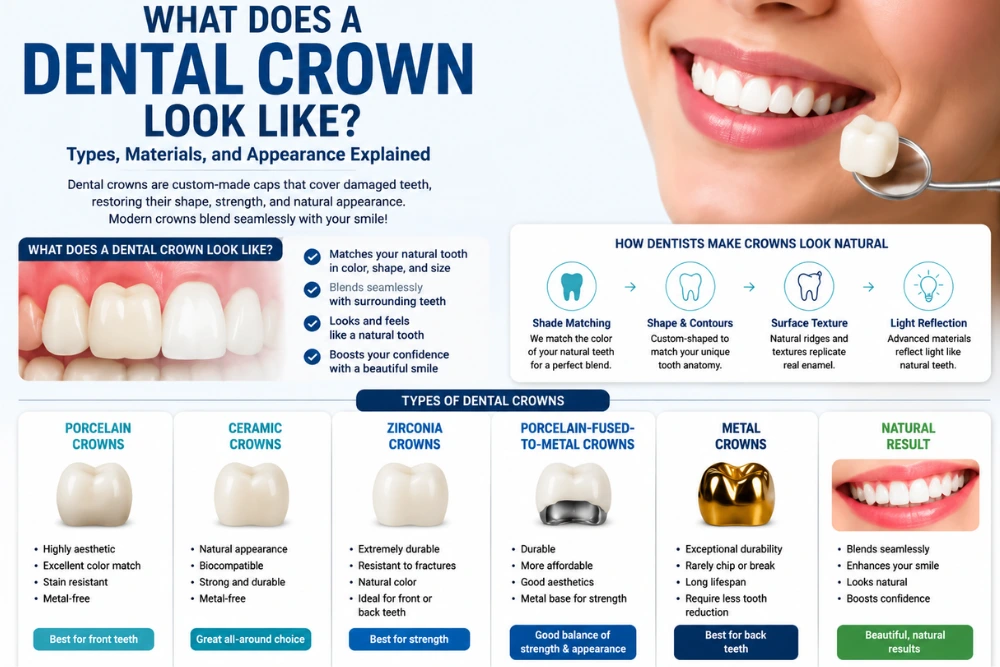
The simple answer is that a dental crown looks like a natural tooth.
Modern crowns are individually designed to match your existing teeth in every possible way, including:
- Tooth color
- Shape
- Size
- Surface texture
- Light reflection
- Bite alignment
When viewed in the mirror, a properly made crown should blend seamlessly into your smile. In many cases, even close friends and family cannot tell which tooth has been restored.
Unlike older dental restorations that sometimes appeared bulky or metallic, today’s crowns use advanced ceramic materials that imitate the translucency and shine of natural enamel.
How Dentists Make Crowns Look Natural
Creating a realistic dental crown requires more than simply choosing a white material.
Your dentist carefully customizes every detail.
Shade Matching
Dentists use professional shade guides to select the closest color match for your surrounding teeth.
If your natural teeth have slight color variations, the crown can be designed to mimic those characteristics.
Shape and Contours
Every person’s teeth are unique.
The crown is shaped to match the neighboring teeth, ensuring your smile looks symmetrical and natural.
Surface Texture
Natural teeth are not perfectly smooth.
Modern crowns include tiny ridges and texture that imitate real enamel.
Light Reflection
High-quality ceramic and porcelain crowns reflect light similarly to natural teeth, preventing the flat or artificial appearance seen with older materials.
Types of Dental Crowns
Several materials are available for dental crowns, each offering different advantages in appearance, durability, and cost.
Porcelain Crowns
Porcelain crowns are among the most popular choices, particularly for front teeth.
They closely mimic natural enamel, making them ideal when appearance is the primary concern.
Advantages
- Highly aesthetic
- Excellent color matching
- Stain resistant
- Metal-free
- Natural translucency
Best For
- Front teeth
- Cosmetic smile restorations
- Patients with metal allergies
Ceramic Crowns
Ceramic crowns provide similar cosmetic benefits to porcelain while offering excellent durability.
Because they contain no metal, ceramic crowns are often recommended for patients seeking a completely natural-looking restoration.
Benefits
- Realistic appearance
- Excellent biocompatibility
- Strong enough for many locations
- Metal-free
Zirconia Crowns
Zirconia crowns have become increasingly popular because they combine exceptional strength with impressive aesthetics.
Earlier zirconia crowns appeared more opaque, but modern translucent zirconia provides a much more natural appearance.
Advantages
- Extremely durable
- Resistant to fractures
- Long-lasting
- Natural color matching
- Suitable for both front and back teeth
Best For
- Patients who grind their teeth
- Molars
- High-bite pressure areas
Porcelain-Fused-to-Metal Crowns
Porcelain-fused-to-metal (PFM) crowns combine a metal framework with a porcelain outer layer.
They provide greater strength than traditional porcelain while maintaining a relatively natural appearance.
Advantages
- Durable
- Affordable
- Good aesthetics
- Suitable for many teeth
Disadvantages
- Porcelain may chip
- The metal edge can become visible if the gums recede
Metal Crowns
Metal crowns are made from gold or other dental alloys.
Although they don’t resemble natural teeth, they remain one of the strongest restoration options available.
Advantages
- Exceptional durability
- Rarely chip or fracture
- Long lifespan
- Require less tooth removal
Best For
- Back molars
- Heavy chewing forces
Which Crown Looks Most Natural?
For most patients, porcelain and ceramic crowns provide the most natural appearance.
They closely imitate:
- Tooth translucency
- Surface texture
- Light reflection
- Natural enamel color
High-quality zirconia crowns also produce outstanding cosmetic results while offering greater durability.
Your dentist will recommend the material that best balances aesthetics and strength based on your individual needs.
Front Tooth Crowns vs Back Tooth Crowns
Different teeth have different requirements.
Front Teeth
Front teeth require:
- Excellent color matching
- Natural translucency
- Beautiful appearance
- Precise shaping
For these teeth, dentists often recommend porcelain or ceramic crowns.
Back Teeth
Molars must withstand heavy chewing pressure.
These crowns prioritize:
- Strength
- Wear resistance
- Longevity
Zirconia and metal crowns are commonly chosen for posterior teeth.
When Is a Dental Crown Needed?
A crown may be recommended if you have:
- Severe tooth decay
- Large fillings
- Cracked teeth
- Broken teeth
- Root canal treatment
- Worn teeth from grinding
- Misshapen teeth
- Severely stained teeth
- Dental implants
- Dental bridges requiring support
Crowns allow dentists to preserve natural teeth while restoring full function.
How Is a Dental Crown Made?
The process usually involves two appointments.
Initial Visit
During your first appointment, the dentist will:
- Examine your tooth
- Take X-rays if necessary
- Remove damaged tooth structure
- Shape the tooth
- Take digital scans or impressions
- Place a temporary crown
The impressions are sent to a dental laboratory where technicians fabricate your custom crown.
Second Visit
Once your permanent crown is ready, your dentist will:
- Remove the temporary crown
- Check the fit
- Verify the color
- Adjust the bite
- Cement the crown securely
After placement, the crown functions just like a natural tooth.
How Long Do Dental Crowns Last?
The average lifespan of a dental crown ranges between 10 and 15 years, although many last much longer with proper care.
Several factors influence longevity, including:
- Crown material
- Oral hygiene
- Diet
- Teeth grinding
- Regular dental checkups
Gold and zirconia crowns often have the longest lifespan.
Caring for Your Dental Crown
Maintaining a dental crown is similar to caring for natural teeth.
Good habits include:
- Brushing twice daily
- Flossing every day
- Using fluoride toothpaste
- Visiting your dentist every six months
- Avoiding chewing ice or hard objects
- Wearing a night guard if you grind your teeth
Although the crown itself cannot decay, the tooth underneath still can.
Advantages of Dental Crowns
Dental crowns provide numerous benefits, including:
- Restore damaged teeth
- Improve chewing ability
- Protect weakened teeth
- Prevent fractures
- Improve appearance
- Cover discoloration
- Support bridges
- Restore dental implants
- Provide long-lasting protection
Are Dental Crowns Noticeable?
Most modern crowns are virtually impossible to identify.
With proper customization, your dentist matches:
- Color
- Shape
- Size
- Bite
- Surface texture
As a result, your crown should blend naturally into your smile without attracting attention.
Frequently Asked Questions
Can people tell if I have a dental crown?
Usually not. Modern crowns are custom-designed to blend seamlessly with your natural teeth.
Which crown material looks the most natural?
Porcelain and ceramic crowns generally provide the most lifelike appearance, followed closely by modern translucent zirconia.
Do crowns stain over time?
High-quality porcelain and ceramic crowns resist staining much better than natural teeth.
Are crowns painful?
The placement procedure is performed under local anesthesia. Mild sensitivity afterward is normal but usually disappears within a few days.
Can a crown break?
Although crowns are durable, they can chip or fracture if exposed to excessive force or trauma.
Final Thoughts
Modern dental crowns are designed to restore both the health and beauty of your smile. Whether made from porcelain, ceramic, zirconia, or another material, today’s crowns closely resemble natural teeth in shape, color, and function.
Choosing the right crown depends on several factors, including the tooth’s location, your bite, aesthetic goals, and budget. At Eagle Falls Dentistry, our experienced team focuses on providing personalized dental care and helping patients choose the right restoration for their needs.
To learn more about your treatment options, meet our team to discover how our dental professionals can help, contact us with any questions, or schedule an appointment to discuss whether a dental crown is the right solution for your smile. With proper care and regular dental visits, a well-made crown can protect your tooth and provide a natural-looking smile for many years.