

What Is a Dental Crown?
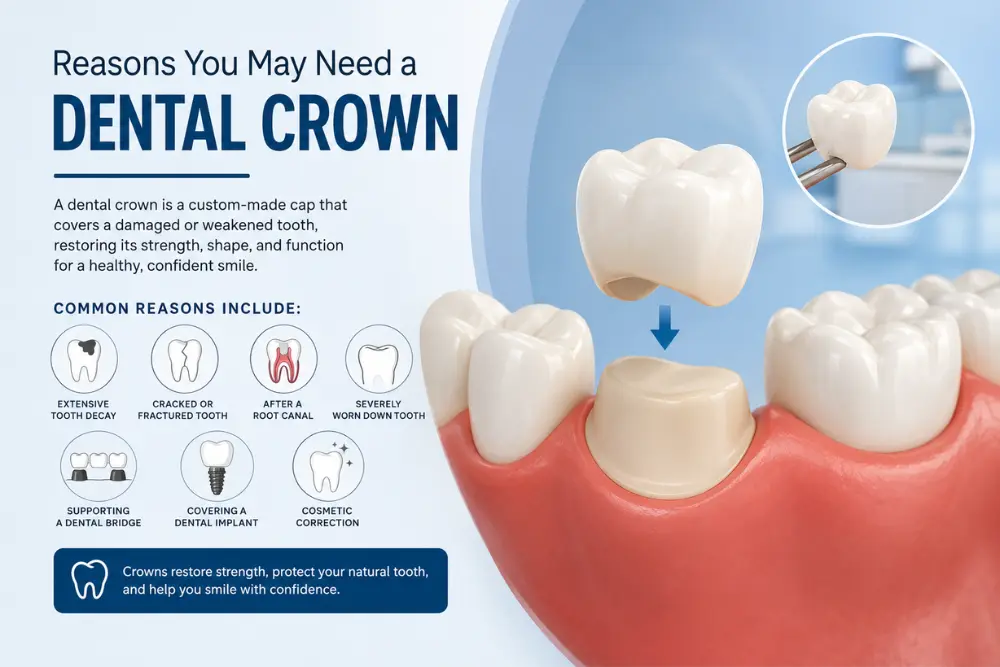
A dental crown is a custom-made cap that fits over the entire visible portion of a damaged or weakened tooth, restoring its shape, size, strength, and function. Think of it as a protective shell that takes over where the natural tooth structure can no longer do the job on its own.
Crowns are typically made from materials such as porcelain, ceramic, zirconia, or a metal alloy, chosen based on the location of the tooth, the amount of biting force it needs to withstand, and the patient’s cosmetic preferences. A crown on teeth in the back of the mouth, for example, often prioritizes strength and durability since molars handle significant chewing pressure, while crowns on front teeth are usually selected for a natural, tooth-like appearance.
Unlike a filling, which repairs a small portion of a tooth, a crown covers the entire tooth above the gumline. This makes it the right solution when damage or decay is too extensive for a filling to reliably hold, but the tooth’s root is still healthy enough to preserve.
Common Reasons You May Need a Dental Crown
Extensive Tooth Decay
When a cavity is large enough that a standard filling wouldn’t leave enough healthy tooth structure to support it, a crown becomes the more reliable option. Rather than risking further breakdown of the tooth, a crown restores the full shape of the tooth while protecting what remains of the natural structure underneath.
A Cracked or Fractured Tooth
Teeth can crack from biting down on something hard, from an injury, or simply from wear over time. A crack that doesn’t reach the tooth’s root can often be treated effectively with a crown, which stabilizes the tooth and prevents the crack from worsening under the pressure of daily chewing.
After a Root Canal
Following a root canal treatment, a tooth becomes more brittle since it no longer has a live blood supply feeding it. A crown is typically placed afterward to protect the treated tooth from fracturing under normal biting force, which is one of the most common and well-established reasons dentists recommend a crown.
A Severely Worn Down Tooth
Years of grinding, clenching, or general wear can flatten and weaken teeth over time. In more advanced cases, a crown can restore the tooth’s original height and shape, improving both function and bite alignment.
Supporting a Dental Bridge
Crowns often serve as the anchor points for a dental bridge, a restoration used to replace one or more missing teeth. The crowns are placed on the healthy teeth on either side of the gap, providing stable support for the bridge in between.
Covering a Dental Implant
When a dental implant is used to replace a missing tooth, a crown is placed on top of the implant post to create a natural-looking, fully functional replacement tooth. In this case, the crown is what patients actually see and use to bite and chew.
Cosmetic Correction
While crowns are primarily a restorative treatment, they’re sometimes used cosmetically to reshape a tooth that’s discolored, misshapen, or significantly smaller than the surrounding teeth, particularly when more conservative options like bonding aren’t sufficient to achieve the desired result.
What Is a Crown for Teeth Made Of?
Crown material selection depends on where the tooth is located and what the patient needs from it. Porcelain and ceramic crowns are popular for their natural appearance and are often used for front teeth, where aesthetics matter most. Zirconia crowns offer an excellent balance of strength and appearance, making them a versatile option for both front and back teeth. Metal alloy crowns, while less common cosmetically, remain one of the most durable options and are sometimes used for molars that endure significant chewing force.
Your dentist will typically discuss which material makes the most sense for your specific tooth, taking into account its location, your bite, and your priorities around appearance versus durability.
What to Expect With a Temporary Tooth Cap
Getting a permanent crown usually isn’t a one-visit process. After the tooth is prepared and shaped to accommodate the crown, an impression is taken and sent to a dental lab, which typically takes one to two weeks to fabricate the final, custom-fitted crown.
In the meantime, a temporary tooth cap is placed over the prepared tooth. This temporary crown protects the tooth and keeps it functional while you wait for the permanent one, though it’s generally made from a less durable material and isn’t meant to withstand the same biting forces long-term. Patients are usually advised to avoid sticky or very hard foods on that side of the mouth until the permanent crown is placed, to avoid dislodging the temporary.
Once the permanent crown is ready, it’s cemented into place during a second appointment, checked for proper fit and bite alignment, and adjusted as needed.
How Long Do Dental Crowns Last?
With proper care, most dental crowns last between 10 and 15 years, and many last considerably longer. Longevity depends heavily on the material used, how well the surrounding tooth structure holds up, and how consistently the patient maintains good oral hygiene. According to the National Institute of Dental and Craniofacial Research, maintaining regular dental checkups and good daily hygiene habits plays a significant role in the long-term success of restorative dental work, including crowns.
Regular checkups allow your dentist to monitor the crown and the tooth underneath it, catching any issues, like a loose fit or new decay at the margin, before they become bigger problems.
Is Getting a Dental Crown Painful?
This is one of the most common concerns patients have, and the good news is that the procedure itself is generally well-tolerated. The tooth is numbed with local anesthesia before any preparation work begins, so patients typically feel pressure rather than pain during the appointment. Some mild sensitivity or tenderness in the days following the procedure is normal, particularly if the tooth required significant reshaping, but this usually resolves within a few days.
When to Talk to Your Dentist About a Crown
If you’re experiencing a cracked tooth, significant sensitivity, visible decay, or you’ve recently had a root canal, it’s worth discussing whether a crown is the right next step. Your dentist can evaluate the extent of the damage and walk you through whether a crown, or a less involved treatment like a filling, makes the most sense for your specific situation.
Frequently Asked Questions
What is a dental crown used for?
A dental crown is used to restore a tooth that’s too damaged, decayed, cracked, or weakened for a filling to reliably repair, covering the entire visible portion of the tooth to restore its strength and function.
What is a crown for teeth made of?
Common materials include porcelain, ceramic, zirconia, and metal alloys, chosen based on the tooth’s location, the biting force it needs to withstand, and cosmetic considerations.
How long does a temporary tooth cap last before the permanent crown is placed?
A temporary crown is typically worn for one to two weeks while the permanent, custom crown is fabricated at a dental lab.
Does getting a crown hurt?
The procedure is performed under local anesthesia, so patients generally feel pressure rather than pain. Mild sensitivity afterward is common and usually resolves within a few days.
How long do crowns on teeth typically last?
Most dental crowns last 10 to 15 years or longer with proper care, regular checkups, and good oral hygiene.
Final Thoughts
A dental crown is one of the most reliable ways to save and restore a tooth that’s been compromised by decay, injury, or wear without resorting to extraction. Understanding what a crown actually does and why your dentist might recommend one makes the decision feel far less intimidating when it comes up.
If you think you might need a crown or you’re dealing with a cracked, worn, or sensitive tooth, schedule an appointment with our team. We’ll take a close look and walk you through the best option for restoring your tooth properly. You can also learn more about our approach to dental crowns and our full range of restorative dental services.