

If you’ve recently gotten a crown or your dentist has recommended one, you’ve probably wondered, How long is this actually going to last? Understanding dental crown lifespan helps you set realistic expectations and, more importantly, shows you what’s within your control when it comes to getting the most life out of your investment.
So how long do crowns last on tooth surfaces that face daily wear, and how long do crowns on teeth last when you factor in grinding, diet, and hygiene? We’ll break down both the averages and the variables that move the number up or down.
At Eagle Falls Dentistry, we’ve been restoring smiles in Bloomingdale since 1972, and crowns are one of the most common restorations we place. Here’s an honest look at how long crowns typically last, what affects their durability, and how to make yours go the distance.
How Long Do Dental Crowns Last?
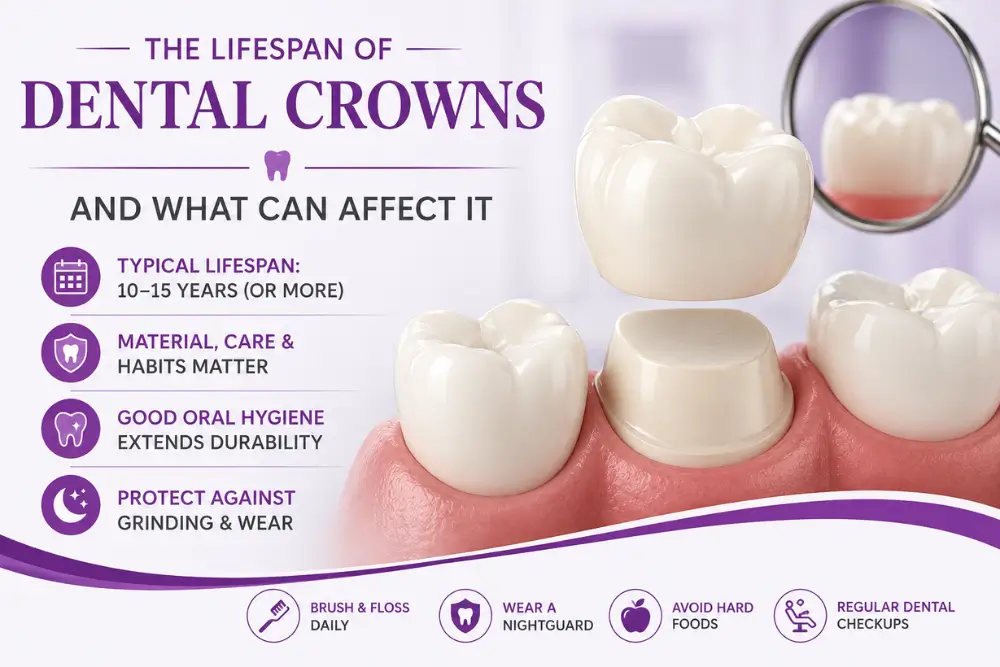
The short answer: most dental crowns last between 10 and 15 years, though many last considerably longer with proper care. So, how long do dental crowns last in real-world terms? It depends heavily on the material, your oral hygiene, and how much wear and tear the crown is exposed to day to day.
Here’s a general breakdown of dental crown life expectancy by material:
- Porcelain-fused-to-metal crowns: typically 10–15 years
- All-ceramic or porcelain crowns: typically 10–15 years, sometimes longer
- Zirconia crowns: often 15–20+ years thanks to their exceptional strength
- Gold and metal alloy crowns: frequently exceed 20 years and are among the most durable options, though less common for visible teeth due to appearance
These numbers represent averages, not guarantees. A crown maintained with excellent oral hygiene and regular checkups can outlast these estimates significantly, while one that’s neglected or subjected to heavy wear may need replacement sooner.
Can Crowns Last a Lifetime?
This is one of the most common questions we hear, and it’s a fair one. Can crowns last a lifetime? In some cases, yes, particularly with zirconia or metal crowns paired with excellent care. But realistically, do dental crowns last forever? Not usually. Even the most durable crown is still subject to the same forces as your natural teeth: chewing pressure, temperature changes, and gradual wear over decades.
What can fail over time isn’t always the crown material itself. Often, it’s the seal between the crown and the underlying tooth, or decay developing at the margin where the crown meets the gumline. This is why regular checkups matter just as much as the crown’s inherent durability.
What Affects Tooth Crown Durability and Lifespan
Several factors influence tooth crown durability lifespan, some of which are within your control and some of which depend on your individual bite and oral anatomy.
1. Crown Material
As outlined above, zirconia and metal crowns tend to outlast porcelain and ceramic options in terms of raw durability, though porcelain offers a more natural appearance, especially for front teeth.
2. Oral Hygiene Habits
Crowns don’t decay the way natural enamel does, but the tooth structure underneath and around the crown absolutely can. Poor brushing and flossing habits allow plaque and bacteria to build up at the crown’s margin, leading to decay that can compromise the entire restoration, crown included.
3. Teeth Grinding (Bruxism)
Grinding or clenching puts significant repetitive stress on crowns, often leading to chips, cracks, or premature wear. If you grind your teeth, especially at night, a custom nightguard can dramatically extend your dental crown longevity.
4. Diet and Chewing Habits
Chewing ice, hard candy, popcorn kernels, or using your teeth to open packaging puts crowns at risk of fracturing. The same habits that damage natural teeth are even harder on a crown’s edges and margins.
5. Location in the Mouth
Crowns on molars, which handle the most chewing force, tend to experience more wear than crowns on front teeth. This is part of why how long porcelain crowns last on front teeth is often a different answer than for back teeth: front crowns deal with less grinding pressure, even though they’re more visible and subject to cosmetic wear like staining over time.
6. Quality of the Original Fit
A well-fitted crown placed by an experienced dentist, with attention to bite alignment and margin precision, tends to last significantly longer than one with a poor seal or improper fit.
How Long Should a Tooth Crown Last? Setting Realistic Expectations
So, how long should a tooth crown last in your specific situation? It comes down to combining the material’s expected lifespan with your personal habits. A zirconia crown on a back molar in a patient with good oral hygiene and no grinding habit could easily last 20 years or more. A porcelain crown on a patient who grinds their teeth nightly without a nightguard might need replacement closer to the 8–10-year mark.
The honest answer is that a crown’s durability isn’t a fixed number; it’s a range influenced by choices you make every day.
Tips for Long-Lasting Dental Crowns
If you want to maximize the life of your crown, a few consistent habits make a real difference:
- Brush twice daily and floss once a day, paying close attention to the area where the crown meets your gumline
- Avoid chewing on hard objects like ice, pens, or fingernails
- Wear a nightguard if you grind or clench your teeth
- Keep up with regular dental checkups every six months so your dentist can catch early signs of wear, decay, or a loosening seal before they become bigger problems.
- Avoid extremely sticky or hard foods that can pull at or crack the crown
- Address any sensitivity or discomfort promptly rather than waiting for it to worsen
Following these habits is the most reliable way to get long-lasting dental crowns that meet or exceed their expected lifespan. Learn more about our Dental crown services on our dedicated page.
Signs Your Crown May Need Attention
Even well-maintained crowns eventually show signs of wear. Watch for:
- Sensitivity to hot or cold around the crowned tooth
- Visible chips, cracks, or rough edges
- A loose or shifting feeling when you bite down
- Persistent bad breath or a bad taste near the crown, which can indicate decay underneath
- Gum recession around the crown margin
If you notice any of these, it’s worth getting it checked sooner rather than later. Catching an issue early often means a simple fix instead of a full crown replacement.
Trust Eagle Falls Dentistry With Your Crown Care
Whether you’re considering a crown for the first time or want to make sure your existing one is holding up well, our team at Eagle Falls Dentistry has decades of experience helping Bloomingdale patients get the most out of their dental restorations and maximize dental crown lifespan. We’ll walk you through material options, fit your crown with precision, and help you build habits that protect your investment for years to come.
Call us at (630) 894-5180 or visit our office at 76 Stratford Drive in Bloomingdale to schedule a consultation or checkup.
Frequently Asked Questions
How long do crowns last on tooth surfaces, and when do they need replacing?
Most crowns last 10–15 years, with some materials like zirconia or gold lasting 20 years or more, depending on care and location in the mouth.
Do dental crowns last forever?
No, but with excellent oral hygiene and care, some crowns can last several decades, especially durable materials like zirconia or metal alloys.
What’s the most durable crown material?
Zirconia and gold or metal alloy crowns tend to be the most durable, though porcelain and ceramic crowns offer a more natural look for visible teeth.
Can a damaged crown be repaired instead of replaced?
In some cases, minor chips can be repaired. More significant damage, such as cracks or a failed seal, usually requires a full crown replacement.
Does grinding my teeth really shorten a crown’s lifespan?
Yes. Bruxism is one of the leading causes of premature crown failure. A nightguard can significantly extend how long your crown lasts.