

If you’ve been scrolling through options to brighten your smile, you’ve probably noticed “whitening” and “bleaching” used like they’re the same thing. They’re not. Knowing the difference can save you from wasted money, sensitive teeth, or disappointing results.
Here’s the quick answer: Teeth whitening is a broad term covering any method that removes stains and restores your teeth’s natural shade. Teeth bleaching is a specific type of whitening that uses peroxide-based agents, hydrogen peroxide, or carbamide peroxide, to change the color of your teeth beyond their natural shade.
In short:
- Whitening = removes stains, restores natural color
- Bleaching = alters tooth color chemically, goes beyond natural shade
Both can give you a brighter smile, but the methods, costs, safety profiles, and results differ. Here’s exactly how they compare and what to expect from professional teeth whitening if you decide to go that route.
What Is Teeth Whitening?
Teeth whitening is the umbrella term for any process that makes your teeth appear lighter. It works mainly by removing surface stains caused by the following:
- Coffee, tea, and red wine
- Smoking or tobacco use
- Certain foods like berries, sauces, and curry
- Everyday plaque buildup
Whitening products like toothpaste, strips, or professional polishing typically don’t contain bleach. They rely on mild abrasives or low-concentration agents that lift surface stains without altering your natural enamel color.
This is why whitening is often the gentler, more accessible option, but it also has a ceiling. It can’t make your teeth whiter than their natural, genetic shade.
What Is Teeth Bleaching?
Teeth bleaching is a more targeted process. It uses peroxide-based chemicals to penetrate the enamel and break down deeper, stubborn stains at a structural level rather than just on the surface.
Because of this, bleaching can genuinely lighten your natural tooth color, sometimes by several shades. That’s why it’s the method most dentists use for professional in-office teeth bleaching treatments.
Common professional bleaching options include:
- In-office bleaching, high-concentration peroxide gel applied under professional supervision, often paired with a special light for faster results
- Custom take-home trays, dentist-fitted trays with a prescribed bleaching gel, are used over several days
- Combination treatments, an in-office session followed by maintenance trays at home
This is the teeth-whitening procedure most people mean when they say “I want my teeth professionally whitened,” even though technically it’s bleaching.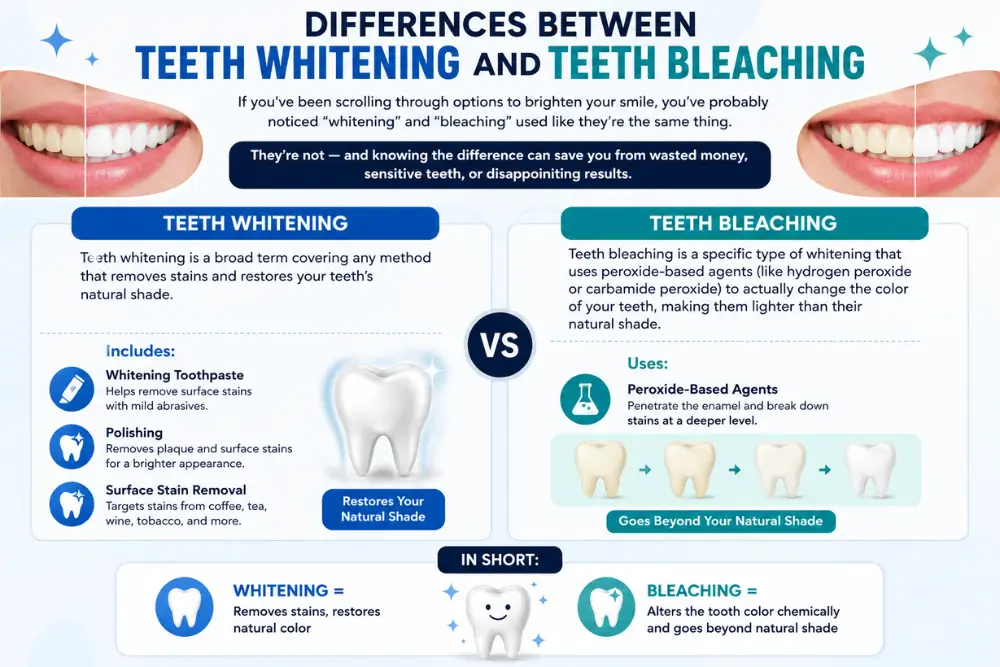
Teeth Whitening vs Teeth Bleaching: Key Differences
| Factor | Teeth Whitening | Teeth Bleaching |
| What it does | Removes surface stains | Changes the natural tooth color |
| Active ingredient | Mild abrasives, low-dose agents | Hydrogen or carbamide peroxide |
| Result | Restores natural shade | Can go lighter than natural shade |
| Where it’s done | Home products, drugstore kits | Dental office or dentist-prescribed trays |
| Speed of results | Gradual, subtle | Faster, more noticeable |
| Sensitivity risk | Low | Moderate, though this is temporary and manageable |
| Best for | Mild staining, maintenance | Deep stains, significant brightening |
When comparing teeth bleaching vs. whitening for your own smile, the real question is: do you want to simply refresh your natural color, or do you want a noticeably brighter result? That answer usually decides which route makes sense.
Which One Actually Works Better?
For mild, surface-level discoloration like coffee stains, whitening toothpaste or strips can help. But for anything deeper, professional teeth whitening is the best teeth whitening method. It’s stronger, faster, and supervised by someone who can protect your gums and enamel throughout the process.
At-home whitening kits also have a consistency problem. Without professional guidance, results vary significantly from person to person. It’s also easy to overuse products, leading to sensitivity or uneven color.
This is exactly why so many people search for how to bleach teeth at home with bleach or how to bleach teeth with bleach. They’re looking for a faster DIY fix. But this is one area worth pausing on.
Why You Should Never Use Household Bleach on Your Teeth
Let’s be direct: household bleach (like chlorine bleach) is not designed for human tissue and should never touch your teeth or gums. It’s a completely different chemical from the dental-grade peroxide used in professional treatments.
Using actual bleach or unregulated whitening products with unknown concentrations can lead to:
- Permanent enamel damage
- Chemical burns on gums and soft tissue
- Increased tooth sensitivity or nerve damage
- Uneven, patchy discoloration that’s difficult to reverse
The American Dental Association has repeatedly warned against unsupervised use of high-concentration whitening agents, noting that improper use can cause lasting harm to teeth and gums.
If your goal is a genuinely whiter smile without the risk, a dental bleaching treatment performed by a licensed dentist is the safe version of what you’re looking for. It uses the same peroxide-based concept, but at a controlled concentration. Your enamel and gum health are protected throughout.
What to Expect From a Professional Teeth Whitening Procedure
A typical in-office bleaching appointment looks like this:
- Consultation and exam: your dentist checks for cavities, gum health, and existing restorations. Bleaching works differently on crowns and fillings than on natural teeth.
- Shade assessment: your current tooth color is recorded, so progress can be measured
- Protective barrier: a gel or shield is applied to protect your gums
- Bleaching gel application: professional-strength peroxide gel is applied to the teeth, sometimes with a special light
- Rinse and reveal: the gel is removed, and your new shade is compared to the starting point
- Aftercare guidance: tips to avoid staining foods and manage any temporary sensitivity
Most people notice a visible difference after a single session, with results that last months longer than store-bought kits when paired with good habits.
Curious what the experience looks like? You can tour our office to see exactly where your treatment would take place or meet our doctors to learn more about the team behind your care.
Cosmetic Teeth Whitening: Is It Worth the Investment?
Cosmetic teeth whitening is often one of the most affordable ways to improve your smile without more invasive procedures like veneers. It’s non-surgical, low-risk when done professionally, and the results show up clearly in photos, interviews, and everyday confidence.
That said, it’s not one-size-fits-all. Sensitivity, existing dental work, and your natural enamel condition all affect results. That’s exactly why a professional evaluation matters more than guessing with at-home kits.
The whitening and bleaching options available today are more effective than ever. Matching the right treatment to your situation is what separates a great result from a frustrating one.
Get a Brighter Smile the Safe Way
Understanding whitening and bleaching as two different tools, rather than interchangeable buzzwords, helps you make a smarter choice for your smile. If your goal is a noticeable, lasting result, a trained dentist is your safest and most effective option.
Ready to get started? Book your appointment online, or contact us if you have questions before booking. You can also visit our homepage to explore more of our services.
FAQs: Teeth Whitening and Bleaching
Is teeth bleaching the same as teeth whitening?
Not exactly. Whitening is the general term for stain removal, while bleaching specifically uses peroxide to change your natural tooth color beyond its original shade.
Which lasts longer, whitening or bleaching?
Professional bleaching typically lasts longer because it works deeper in the enamel, though results still depend on your diet and oral hygiene habits.
Can I bleach my teeth at home safely?
Only with dentist-prescribed trays and gel. Household bleach or unregulated kits are not safe for use on teeth or gums, ever.
Does teeth bleaching hurt?
Some people experience temporary sensitivity, which usually fades within a day or two after treatment.
How often can I get my teeth professionally bleached?
This depends on your enamel health and lifestyle habits. Your dentist can recommend a safe schedule during your visit. Book a consultation to find out what works for your smile.
What is the difference between teeth bleaching and whitening results
Whitening restores your natural shade by lifting surface stains. Bleaching can take your teeth several shades lighter than their natural color, making it the better option for significant brightening.