

A beautiful smile is often one of the first things people notice, and it can significantly influence your confidence in both personal and professional settings. If you have chipped, stained, uneven, or slightly misaligned teeth, cosmetic veneers can provide a fast and effective way to transform your smile without extensive dental work.
Modern cosmetic solutions with veneers are designed to look incredibly natural while improving the appearance of your teeth for many years. Whether you’re preparing for a special event or simply want to feel more confident every day, veneers offer a minimally invasive cosmetic treatment with long-lasting results.
In this guide, you’ll learn what veneers are, the different types available, who is a suitable candidate, how the procedure works, and how to choose the best option for your smile.
What Are Cosmetic Veneers?
Many patients ask, “What are dental veneers?”
A tooth veneer is a thin, custom-made shell that is bonded to the front surface of a tooth to improve its appearance. Veneers are designed to mimic the colour, texture, and translucency of natural enamel, creating a beautiful yet natural-looking smile.
Unlike crowns, which cover the entire tooth, veneers cover only the visible front portion of the tooth, making it a more conservative cosmetic procedure.
Dentists commonly recommend veneers to correct:
- Stained or discoloured teeth that don’t respond to whitening
- Chipped or cracked teeth
- Small gaps between teeth
- Worn-down teeth
- Misshapen teeth
- Slightly crooked teeth
- Uneven tooth sizes
- Minor enamel defects
Because veneers require minimal tooth preparation, they preserve much of your natural tooth structure while delivering dramatic cosmetic improvements.
Why Are Cosmetic Veneers So Popular?
Over the past decade, cosmetic dentistry has become increasingly popular, and veneers remain one of the most requested smile enhancement treatments.
There are several reasons why patients choose cosmetic veneers over other cosmetic procedures.
They Instantly Improve Your Smile
Unlike orthodontic treatments that can take months or years, veneers can dramatically improve your smile within just a few appointments.
Patients can correct multiple cosmetic concerns simultaneously, including:
- Colour
- Shape
- Length
- Alignment
- Symmetry
The result is a balanced, healthy-looking smile that complements your facial features.
Natural Appearance
Today’s veneers are nothing like the overly white, bulky restorations of the past.
Modern porcelain and ceramic materials closely replicate natural enamel by reflecting light similarly to real teeth. Each veneer is individually crafted to match your smile, ensuring the final result looks authentic rather than artificial.
An experienced cosmetic dentist carefully considers:
- Face shape
- Smile line
- Lip position
- Gum contour
- Existing tooth colour
- Tooth proportions
This personalised approach creates a smile that enhances your appearance without looking “fake.”
Long-Lasting Results
One of the biggest advantages of cosmetic veneers is their durability.
Depending on the material chosen and how well they are maintained:
- Porcelain veneers typically last 10–15 years or longer
- Composite veneers generally last 5–7 years
- Zirconia veneers can last well over a decade with proper care
Maintaining good oral hygiene and attending regular dental check-ups significantly extends the lifespan of your veneers.
Minimal Tooth Preparation
Compared to dental crowns, veneers require far less removal of healthy tooth structure.
In many cases, only a thin layer of enamel is gently reshaped to allow the veneer to fit naturally.
Some ultra-thin veneers require little or even no enamel removal, making them one of the most conservative cosmetic dental treatments available.
Types of Cosmetic Veneers
Not all veneers are the same. Different materials offer different advantages depending on your cosmetic goals, oral health, and budget.
The four primary types include:
- Porcelain Veneers
- Composite Veneers
- Lumineers (No-Prep Veneers)
- Zirconia Veneers
Let’s examine each option in detail.
Porcelain Veneers
Porcelain veneers are considered the gold standard in cosmetic dentistry.
These ultra-thin ceramic shells are custom-fabricated in a dental laboratory before being permanently bonded to your teeth.
Their ability to imitate natural enamel makes them the preferred choice for patients seeking premium cosmetic results.
Benefits of Porcelain Veneers
✔ Exceptional aesthetics
✔ Highly stain resistant
✔ Long lifespan
✔ Natural translucency
✔ Strong and durable
✔ Colour stability
Porcelain resists stains from coffee, tea, wine, and smoking much better than composite materials, helping maintain a bright smile for many years.
Because each veneer is individually designed, dentists can create a completely customised smile that complements your facial proportions rather than producing an unnatural “perfect” appearance.
Potential Limitations
Although porcelain veneers offer outstanding results, they do have some considerations:
- Higher initial investment
- Usually requires two or three appointments
- Minor enamel reduction is typically permanent
- Repairs usually require replacement rather than simple patching
For patients seeking the most natural and longest-lasting cosmetic improvement, porcelain remains one of the best available choices.
Composite Veneers
Composite veneers provide a more affordable alternative while still delivering impressive cosmetic improvements.
Instead of being manufactured in a dental laboratory, composite resin is applied directly to the teeth by the dentist and sculpted into the desired shape.
This allows many patients to complete treatment in a single appointment.
Benefits of Composite Veneers
- Lower overall cost
- Same-day treatment
- Minimal tooth preparation
- Easily repaired if chipped
- Conservative procedure
- Excellent option for small cosmetic corrections
Composite veneers are particularly popular among patients looking to improve:
- Small chips
- Minor gaps
- Slight discolouration
- Small shape irregularities
Limitations of Composite Veneers
While composite materials continue to improve, they are generally less durable than porcelain.
Patients should understand that composite veneers:
- Can stain over time
- May require polishing
- Wear faster
- Need replacement sooner than porcelain
However, for many patients, their affordability and convenience make them an excellent cosmetic solution.
Lumineers (No-Prep Veneers)
For patients looking for a more conservative cosmetic treatment, Lumineers and other no-prep veneers offer an attractive alternative. These ultra-thin veneers are approximately the thickness of a contact lens and, in many cases, require little to no enamel removal before placement.
Unlike traditional porcelain veneers, Lumineers preserve more of your natural tooth structure. This makes them an excellent choice for patients with healthy teeth who want to improve minor cosmetic imperfections without permanently altering their smile.
Benefits of Lumineers
- Minimal or no tooth preparation
- Comfortable treatment with little sensitivity
- Natural-looking results
- Preserve healthy enamel
- Stain resistant
- Can often be reversed in suitable cases
Potential Limitations
Although Lumineers work well for many patients, they are not suitable for every situation.
They may not effectively mask:
- Severely stained teeth
- Large gaps
- Significant tooth rotations
- Extensive tooth damage
- Very dark underlying teeth
Because they are thinner than traditional porcelain veneers, proper case selection is essential to achieve the best cosmetic outcome.
Zirconia Veneers
While porcelain remains the most popular material, zirconia veneers are becoming increasingly common for patients who require additional strength.
Zirconia is an advanced ceramic material known for its exceptional durability and fracture resistance.
These veneers are often recommended for patients who:
- Have a stronger bite
- Grind their teeth
- Have slightly weakened teeth
- Require additional structural support
Advantages of Zirconia Veneers
- Extremely durable
- Highly resistant to fractures
- Long-lasting
- Biocompatible
- Excellent stain resistance
Limitations
Although zirconia veneers are incredibly strong, they are generally less translucent than porcelain.
For patients prioritising ultimate aesthetics—particularly on the front teeth—porcelain usually provides the most natural appearance.
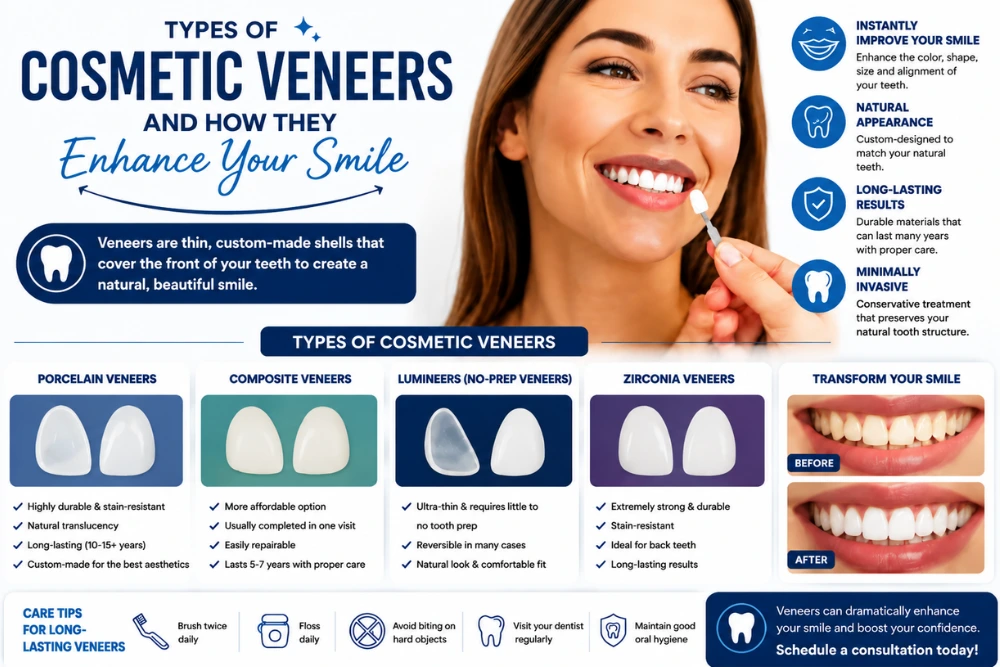
Porcelain vs Composite vs Lumineers vs Zirconia
Choosing the right veneer depends on your cosmetic goals, budget, and oral health.
| Feature | Porcelain | Composite | Lumineers | Zirconia |
| Stain Resistance | Excellent | Moderate | Excellent | Excellent |
| Tooth Preparation | Minimal | Minimal | Little or None | Moderate |
| Repairability | Replacement | Easy Repair | Replacement | Replacement |
| Lifespan | 10–15+ Years | 5–7 Years | 10–20 Years | 15+ Years |
| Best For | Complete Smile Makeovers | Budget-Friendly Improvements | Conservative Cosmetic Treatment | Heavy Bite Patients |
Every smile is different. A consultation with an experienced cosmetic dentist is the best way to determine which option will provide the most natural and long-lasting results.
Who Is a Good Candidate for Cosmetic Veneers?
Although cosmetic veneers are incredibly versatile, they are not suitable for everyone.
The best candidates typically have:
- Healthy gums
- Good oral hygiene
- Sufficient tooth enamel
- Minor cosmetic concerns
- Realistic expectations
- Healthy bite alignment
Veneers are ideal for patients who want to improve:
- Chipped teeth
- Small gaps
- Uneven teeth
- Worn enamel
- Intrinsic staining
- Mild crowding
If your teeth are generally healthy but have cosmetic imperfections, veneers can dramatically improve your smile without extensive dental treatment.
Who Should Avoid Veneers?
One area many online guides overlook is identifying patients who may not be suitable candidates.
You may require additional treatment before receiving veneers if you have:
Active Gum Disease
Healthy gums are essential because veneers rely on a stable foundation.
Gum disease should always be treated first.
Tooth Decay
Any cavities must be repaired before veneers are placed.
Covering untreated decay with veneers can lead to more serious dental problems later.
Severe Teeth Grinding (Bruxism)
Patients who grind or clench their teeth place excessive pressure on veneers.
Although veneers can still be an option, your dentist may recommend wearing a custom night guard to protect your investment.
Significant Bite Problems
Major bite issues or severe misalignment are often better treated with orthodontics before cosmetic veneers.
Correcting the bite first helps ensure long-term success.
Insufficient Tooth Enamel
Since veneers bond to enamel, patients with significant enamel loss may require alternative treatments such as crowns.
If a tooth has extensive structural damage rather than cosmetic concerns, Dental Crowns may provide a more appropriate long-term solution than veneers.
Your Cosmetic Veneer Journey: Step-by-Step
Understanding the treatment process helps patients feel more confident before beginning their smile transformation.
Step 1: Initial Consultation
Your dentist will carefully examine:
- Teeth
- Bite
- Gum health
- Existing restorations
- Smile symmetry
Photographs and digital scans may also be taken to plan your new smile.
If you would like personalised advice, you can meet our dental team to discuss your smile goals and determine whether veneers are the right option for you.
Step 2: Smile Design
Modern cosmetic dentistry goes far beyond simply making teeth whiter.
Your dentist evaluates:
- Facial proportions
- Lip position
- Gum line
- Tooth length
- Smile width
- Overall facial harmony
Digital Smile Design technology often allows patients to preview their new smile before treatment begins.
Step 3: Tooth Preparation
For porcelain veneers, a very small amount of enamel is gently removed.
Composite veneers often require minimal preparation, while Lumineers may require none at all.
The goal is to create enough space for the veneers while preserving as much healthy tooth structure as possible.
Step 4: Digital Impressions
Instead of uncomfortable traditional moulds, many dental practices now use digital scanners.
These highly accurate scans are sent to a dental laboratory where each veneer is individually crafted.
Temporary veneers may be placed while your permanent restorations are being fabricated.
Step 5: Veneer Placement
Once your custom veneers are ready:
- Temporary veneers are removed
- Each veneer is checked for fit and colour
- Special dental adhesive permanently bonds the veneers
- Excess cement is removed
- Final polishing is completed
- Bite adjustments are made
The result is a smile designed specifically for your facial features and cosmetic goals.
Step 6: Follow-Up Care
A follow-up appointment ensures:
- Comfortable bite alignment
- Healthy gum response
- Secure bonding
- Patient satisfaction
Regular dental check-ups also help maintain the appearance and longevity of your veneers.
If you’re considering a smile makeover, you can schedule an appointment to receive a personalised consultation and discuss the most suitable cosmetic treatment options.
- Recovery timeline
- How to care for cosmetic veneers
- Common mistakes to avoid
- Veneers vs Crowns vs Bonding vs Whitening
- Risks and limitations
- Cost factors
- 12 SEO FAQs
- Conclusion with a strong CTA and natural internal links to the remaining Eagle Falls pages.
Recovery Timeline After Getting Cosmetic Veneers
One of the biggest advantages of cosmetic veneers is that there is very little downtime compared to many other dental procedures. Most patients return to work or their daily routine immediately after treatment. However, understanding what to expect during recovery helps ensure the best long-term results.
The First 24 Hours
After your veneers are bonded, it’s normal to experience mild sensitivity to hot and cold foods or drinks. This usually subsides within a few days.
During the first day, it’s best to:
- Eat soft foods if your teeth feel sensitive.
- Avoid very hot or icy drinks.
- Refrain from biting directly into hard foods.
- Follow your dentist’s aftercare instructions carefully.
The First Week
As your mouth adjusts to your new veneers, they will begin to feel completely natural. Any slight changes in your bite can usually be corrected during a follow-up appointment.
Most patients report:
- Improved comfort
- Better speech adaptation
- Increased confidence when smiling
Long-Term Recovery
Once fully adjusted, your veneers should function just like natural teeth. With proper care and regular dental visits, they can provide many years of beautiful, reliable results.
How to Care for Cosmetic Veneers
Although veneers are durable, they still require proper maintenance to preserve their appearance and longevity.
Practice Excellent Oral Hygiene
Maintain a consistent oral care routine by:
- Brushing twice daily with a soft-bristle toothbrush
- Using fluoride toothpaste
- Flossing every day
- Cleaning along the gumline to prevent plaque buildup
Healthy gums are essential for maintaining the appearance of your veneers.
Avoid Using Teeth as Tools
Even strong porcelain veneers can chip under excessive force.
Avoid:
- Opening packages with your teeth
- Biting fingernails
- Chewing pens or pencils
- Cracking ice
- Biting hard sweets
Wear a Night Guard if Recommended
If you grind or clench your teeth while sleeping, your dentist may recommend a custom night guard.
This simple appliance protects both your veneers and your natural teeth from unnecessary wear.
Visit Your Dentist Regularly
Routine examinations allow your dentist to:
- Check the condition of your veneers
- Monitor gum health
- Remove plaque and tartar
- Polish your smile
- Detect any issues early
Professional maintenance helps maximise the lifespan of your veneers.
Common Mistakes That Can Damage Veneers
Many patients unknowingly shorten the lifespan of their veneers through everyday habits.
Avoid these common mistakes:
- Chewing ice
- Opening bottles with your teeth
- Biting hard candies
- Nail biting
- Using abrasive whitening toothpaste
- Ignoring teeth grinding
- Skipping dental check-ups
- Smoking excessively
While porcelain veneers resist stains exceptionally well, limiting tobacco use and maintaining good oral hygiene will keep your smile looking its best.
Cosmetic Veneers vs Other Cosmetic Dental Treatments
Choosing the right cosmetic treatment depends on your goals, oral health, and budget.
Cosmetic Veneers vs Teeth Whitening
Professional whitening works well for healthy teeth with surface stains.
However, whitening cannot:
- Repair chips
- Close gaps
- Improve tooth shape
- Correct uneven teeth
Veneers provide a complete smile transformation rather than simply changing tooth colour.
Cosmetic Veneers vs Dental Bonding
Dental bonding uses composite resin to repair small imperfections.
Bonding is:
- Less expensive
- Completed in one visit
- Ideal for minor chips
However, veneers generally provide:
- Better aesthetics
- Greater durability
- Superior stain resistance
- Longer lifespan
Cosmetic Veneers vs Dental Crowns
While veneers enhance the front surface of healthy teeth, crowns completely cover a damaged tooth to restore its strength and function.
If a tooth has extensive decay, a large filling, or significant structural damage, a crown may be the better treatment option. Learn more about Dental Crowns and when they are recommended by visiting the Eagle Falls Dentistry website.
Risks and Limitations of Cosmetic Veneers
Although cosmetic veneers have an excellent success rate, every dental procedure has limitations.
Potential considerations include:
- Minor enamel removal for porcelain veneers is usually irreversible.
- Temporary tooth sensitivity may occur after treatment.
- Veneers may chip if exposed to excessive force.
- They cannot prevent tooth decay if oral hygiene is neglected.
- Gum recession over time may expose the veneer margins.
- Veneers may eventually require replacement after many years of use.
Choosing an experienced cosmetic dentist greatly reduces these risks and ensures your veneers are carefully planned for long-term success.
What Affects the Cost of Cosmetic Veneers?
Rather than focusing on a fixed price, it’s important to understand the factors that influence the overall cost of treatment.
These include:
- Type of veneer material (porcelain, composite, Lumineers, or zirconia)
- Number of veneers required
- Complexity of the case
- Digital smile design and planning
- Dental laboratory quality
- Dentist’s experience
- Additional treatments, such as whitening or gum contouring
During your consultation, your dentist will recommend the most suitable treatment plan based on your goals and oral health.
Frequently Asked Questions About Cosmetic Veneers
1. How long do cosmetic veneers last?
Porcelain veneers typically last 10–15 years or longer, while composite veneers usually last 5–7 years. With excellent oral hygiene and regular dental check-ups, many patients enjoy their veneers for even longer.
2. Do veneers look natural?
Yes. Modern veneers are custom-designed to match the colour, shape, and translucency of your natural teeth, creating a realistic and balanced smile.
3. Are cosmetic veneers permanent?
Porcelain veneers are considered a long-term treatment because a small amount of enamel is usually removed. Composite veneers are also long-lasting but may require more frequent maintenance.
4. Can veneers fix crooked teeth?
Veneers can improve the appearance of mildly crooked or uneven teeth. However, severe alignment problems may require orthodontic treatment before veneers are considered.
5. Can veneers stain?
Porcelain veneers are highly resistant to staining. Composite veneers are more susceptible to discoloration from coffee, tea, red wine, and tobacco.
6. Is the veneer procedure painful?
Most patients experience little to no discomfort. Local anaesthetic is used when tooth preparation is required, and any temporary sensitivity typically resolves within a few days.
7. Can I eat normally after getting veneers?
Yes. Once the veneers are securely bonded, you can enjoy most foods. However, avoid biting very hard objects such as ice, hard candies, or nutshells to protect your veneers.
8. Do veneers require special care?
No. Caring for veneers is similar to caring for natural teeth. Brush twice daily, floss every day, and visit your dentist regularly for professional cleanings and examinations.
9. Are veneers better than crowns?
It depends on the condition of the tooth. Veneers are ideal for cosmetic improvements, while crowns are recommended when a tooth needs significant structural reinforcement.
10. Can one veneer be replaced?
Yes. If a veneer becomes damaged or wears out over time, it can usually be replaced without affecting the surrounding veneers.
11. Will my veneers match my natural teeth?
Absolutely. Each veneer is carefully customised to blend seamlessly with your surrounding teeth for a harmonious, natural-looking smile.
12. How do I know if veneers are right for me?
The best way to determine whether veneers are the right solution is through a professional consultation. An experienced cosmetic dentist will evaluate your oral health, discuss your smile goals, and recommend the most appropriate treatment.
Transform Your Smile with Cosmetic Veneers
If you’re looking for a long-lasting way to improve stained, chipped, uneven, or worn teeth, cosmetic veneers offer one of the most effective solutions in modern dentistry. Whether you choose porcelain, composite, Lumineers, or zirconia veneers, the key to achieving beautiful results lies in personalised treatment planning and expert care.
At Eagle Falls Dentistry, our experienced team is committed to creating smiles that look natural, feel comfortable, and complement your unique facial features. From your initial consultation to your final smile transformation, we’ll guide you through every step of the process with personalised care.
If you’re ready to discover how cosmetic solutions with veneers can enhance your smile, schedule an appointment with our team today. You can also contact us if you have any questions or would like to learn more about your treatment options. Our experienced professionals are here to help you achieve the confident, healthy smile you deserve.