

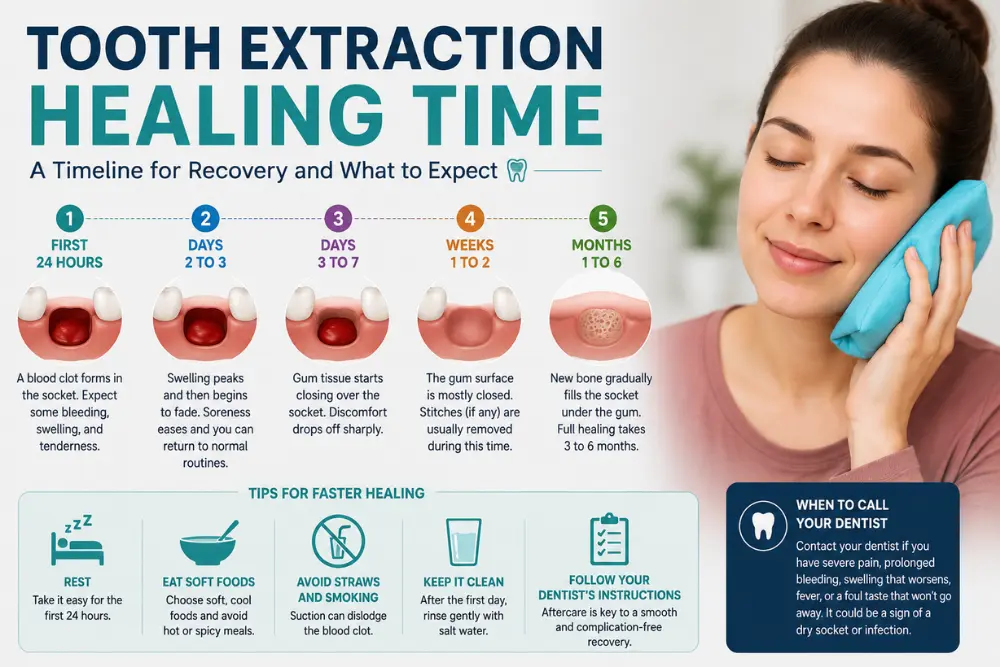
Most people feel back to normal within a few days of a tooth extraction, but full healing takes longer. The gum surface usually closes in one to two weeks, while the bone underneath keeps rebuilding for three to six months. A simple front tooth removal heals faster than a molar or a surgical extraction. How quickly you recover depends on the tooth, your health, and how well you follow aftercare.
Getting a tooth pulled sounds worse than it usually is. The procedure is routine, and the recovery is predictable when you know what to expect. The question almost everyone asks first is how long the extraction tooth healing time really is, so let me give you the real timeline, stage by stage, plus what helps it along and what slows it down.
Tooth Extraction Healing Timeline
Healing after a tooth extraction happens in stages, not all at once. The visible part settles quickly. The part you cannot see takes months. Here is how the teeth removal recovery time usually unfolds.
The First 24 Hours
Right after your extraction in the dentist’s office, a blood clot forms in the socket, and that clot is everything. It protects the bone and starts the healing. Expect some bleeding, mild swelling, and tenderness. Your only job this day is to protect the clot, rest, and avoid anything that could dislodge it.
Days 2 to 3
Swelling usually peaks around now, then starts to fade. The soreness eases, and most people are comfortable enough to return to work or normal routines. Cold compresses and any dentist-approved pain relief make these days easier.
Days 3 to 7
The gum tissue begins closing over the socket, and discomfort drops off sharply. By the end of the first week, most people feel close to normal, even though healing is still happening underneath.
Weeks 1 to 2
The gum surface has largely closed. If you were given stitches that need removal, this is usually when they come out. The socket is well on its way, though not finished.
Months 1 to 6
This is the part most people do not realize. Below the gum, new bone slowly fills the socket over three to six months. You will not feel this happening, and it does not hold you back, but it is why your dentist plans the timing for anything that follows, such as an implant.
Tooth Removal Recovery Time by Type
Not every extraction heals on the same clock. The type of tooth removal makes a real difference.
A simple extraction of a visible, single-rooted tooth like a front tooth is the fastest. The socket is small, and the surface often feels settled within a few days. A molar removal recovery takes longer because molars are bigger, have multiple roots, and leave a larger socket that needs more time to close.
A surgical extraction, where a tooth is impacted or removed in pieces, involves the most tissue and the longest recovery, often a week or more of noticeable healing before you feel like yourself.
Wisdom teeth are their own case. Because they sit at the back and are often impacted, their removal usually falls into the surgical category, with a recovery closer to one to two weeks.
What Helps a Tooth Extraction Heal Faster
You have more control over healing than you might think. The first day sets the tone, so protect that blood clot above all. A few simple habits speed things along and keep complications away.
Rest for the first 24 hours and keep your head slightly elevated. Stick to soft, cool foods like yogurt, smoothies, and mashed potatoes at first. Avoid straws, smoking, and vigorous rinsing for the first few days, since the suction and pressure can pull the clot loose.
Keep the rest of your mouth clean, and after the first day, gentle salt-water rinses help. Take any medication exactly as your dentist directs. Your dentist will give you specific post-therapy instructions, and following them is the single biggest thing that keeps recovery on track.
What Slows Healing Down
A few things drag recovery out, and most are avoidable. Smoking is the big one, since it starves the tissue of oxygen and greatly raises the risk of a painful dry socket. Poor aftercare, disturbing the clot, or an existing health condition like diabetes can all extend the teeth removal recovery time. Age and general health play a part too. None of these mean healing will go wrong, but they are worth knowing so you can give yourself the best start.
Warning Signs to Watch For
Most recoveries are smooth, but call your dentist if something feels off. Reach out for bleeding that will not slow after several hours, pain that gets worse after day three instead of better, swelling that keeps growing, a fever, or a foul taste that will not clear.
These are uncommon, and a quick call is always better than waiting it out. If you think you have a dry socket, where the clot is lost and the pain is sharp, your dentist can treat it and bring fast relief.
When to See a Dentist About a Tooth Extraction
If you have a badly damaged, decayed, or painful tooth, a dental removal of teeth may be the right call, or it may be avoidable. Only an exam can tell. Whatever the reason, a planned extraction with proper aftercare heals far more predictably than a tooth left to get worse.
At Eagle Falls Dentistry, we handle tooth extractions gently, with sedation options for nervous patients, and we walk you through recovery every step of the way. Schedule an appointment or call 630-894-5180 if a tooth is bothering you.
Trusted Bloomingdale Dentistry Since 1972
A tooth extraction is only as smooth as the hands behind it and the plan that follows. That is where experience earns its place.
More Than Fifty Years of Care
Eagle Falls Dentistry has served the Bloomingdale community since 1972. Decades of extractions, from simple removals to complex surgical cases, mean recovery here is guided by people who have seen how each type actually heals, not a rushed in-and-out visit.
The Right Call, Not the Quick One
The best extraction is sometimes the one you avoid. Our team weighs whether a tooth can be saved with a filling, crown, or other treatment before recommending removal, because keeping a healthy tooth is almost always the better outcome.
Comfort Built Into Every Step
From sedation options for anxious patients to clear, written aftercare, the whole visit is built to make a procedure people dread feel manageable. We do not consider the job done until you know exactly how to heal well at home.
FAQs
How long does it take to heal after a tooth extraction?
The gum surface usually closes within one to two weeks, while the bone underneath continues rebuilding for three to six months. Most people feel back to normal within a few days.
How long does molar removal recovery take?
Longer than a front tooth, since molars are larger and have multiple roots. Expect noticeable healing over about one to two weeks, with the socket fully closing over the following months.
What is the fastest way to heal after a tooth extraction?
Protect the blood clot. Rest the first day, eat soft, cool foods, avoid straws and smoking, keep the area clean, and follow your dentist’s aftercare instructions exactly.
When can I eat normally after a tooth extraction?
Most people return to soft foods within a day or two and normal foods within about a week, though you should keep chewing away from the socket until it feels settled.
What is a dry socket?
A dry socket happens when the protective blood clot is lost too early, exposing the bone. It causes sharp pain a few days after the extraction and should be treated by your dentist.