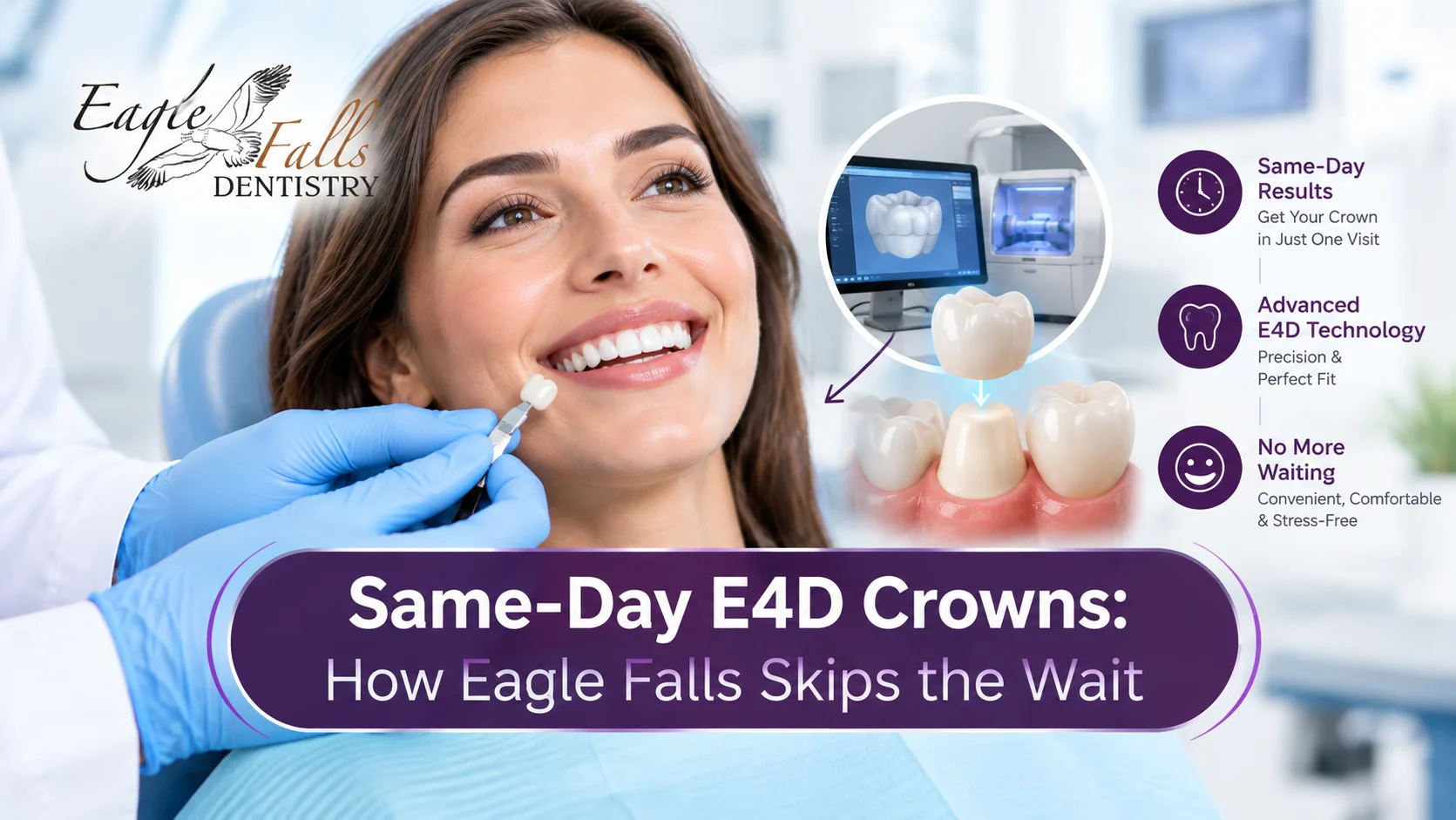


Your front teeth carry disproportionate visual weight. A single discolored tooth, a gap, or slight asymmetry pulls focus from your entire face. Whitening addresses staining but won’t fix shape or alignment problems. Orthodontics straightens teeth over years. Neither resolves the fundamental issue: your front teeth don’t match how you want to look.
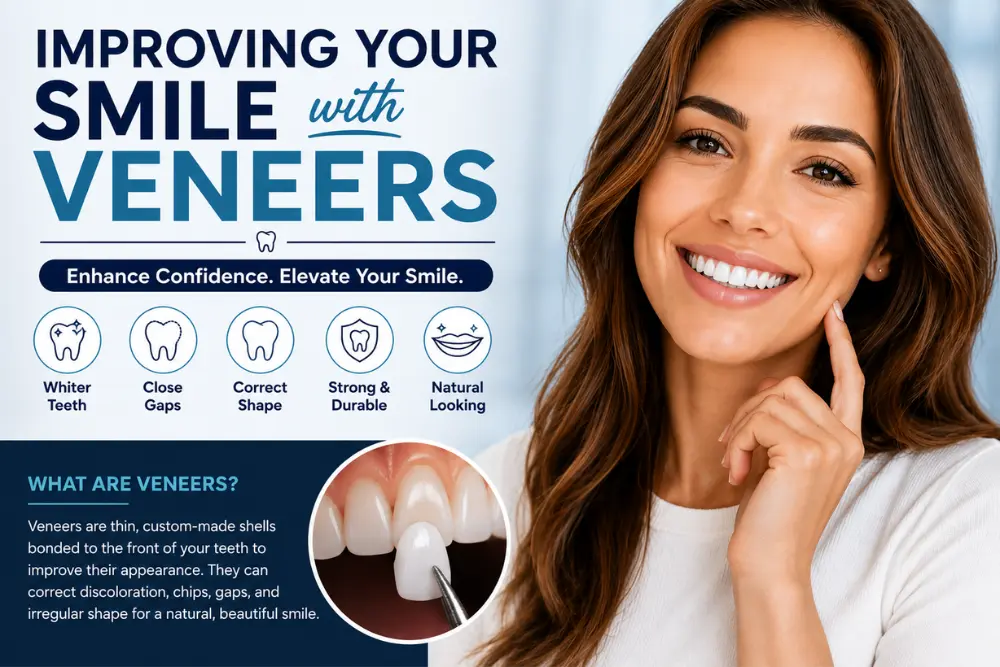
Veneers solve this directly. A veneer is a thin shell bonded to the front of your tooth. Its visible surface becomes whatever shape, shade, and texture you want. The tooth structure underneath remains intact. The result looks like your natural teeth improved, not like you’re wearing cosmetic appliances.
Two main types exist: composite and porcelain. Understanding the differences matters because each has real tradeoffs that affect how long they last, how they look, and what they cost.
Composite Veneers vs Porcelain Crowns
This comparison gets muddied because people sometimes confuse veneers with crowns and composites with porcelain. Clarity requires separating these distinctions.
A veneer covers only the front surface of your tooth. A crown covers the entire tooth. For cosmetic improvement on healthy teeth, veneers are almost always the right choice because they preserve tooth structure. Crowns make sense when a tooth is severely damaged, has a large filling, or requires structural reinforcement.
Composite veneers use the same material as tooth-colored fillings. Your dentist applies it directly to your tooth, sculpts it into shape, and hardens it with a special light. The entire process happens in one appointment. Composite costs less upfront, typically $250 to $600 per tooth. The tradeoff is durability and appearance. Composite stains more easily and typically lasts 5 to 7 years before chipping or discoloring.
Porcelain veneers are custom-made in a laboratory. Your dentist removes a thin layer of enamel, takes an impression, and sends it to the lab. Two weeks later, you return for bonding. The cost runs $800 to $2,500 per tooth. Porcelain resists staining far better than composite. It mimics tooth translucency more convincingly. Most porcelain veneers last 10 to 15 years. Some last 20 years with proper care.
The choice between them hinges on how long you want the result to last and how much you’re willing to spend. If you want a temporary improvement or can’t afford porcelain, composite works. If you want something that looks exceptional and lasts well, porcelain delivers.
Neither is a crown, and conflating the two creates unnecessary confusion in treatment planning.
Veneers vs Crowns on Front Teeth
Front teeth see more force than people realize. Every bite channels pressure through them. Enamel is remarkably tough, but it’s not indestructible. If a front tooth has experienced previous trauma, infection, or a large filling, it becomes weaker. That tooth might ultimately need a crown.
Veneers work best on structurally sound teeth. The enamel is intact. There’s no endodontic history (root canal). The tooth can withstand biting forces. In this situation, veneers preserve the most tooth structure. You sacrifice minimal enamel. The underlying tooth remains functional.
Crowns become necessary when structural integrity is compromised. A tooth with a history of root canal treatment, a massive filling, or previous fracture needs the protection a crown provides. The crown distributes biting forces across the entire tooth rather than concentrating them on the thinner front veneer area.
For purely cosmetic improvement on healthy front teeth, veneers are almost always preferable. They cost less, require less tooth preparation, and preserve your natural tooth structure. Crowns make sense when the tooth needs structural support, not just cosmetic coverage.
How Veneers Improve Smiles
The improvements veneers create extend beyond simply covering problem areas. They address multiple issues simultaneously.
Veneers correct the shade of your teeth. They match any whiteness level you want and maintain that color indefinitely. Unlike whitening treatments that fade, veneer color is permanent until you replace it.
They adjust tooth shape. Worn, short, or unevenly proportioned teeth become symmetrical and full. Teeth that taper toward the gum become uniformly wide. The overall smile looks more youthful because worn teeth typically indicate age.
They close gaps. A veneer extends to the contact point between adjacent teeth, eliminating small spaces without requiring orthodontics. This works for minor gaps. Larger ones might need braces first.
They create proportion. Veneers can make narrow smiles appear wider by extending teeth toward the corners of your mouth. They adjust the smile line, tooth length, and gum exposure to match your face.
They mask previous damage. Chips, cracks, and discoloration simply disappear. The veneer becomes the new visible surface.
The cumulative effect is substantial. A smile that looked worn, yellowed, or slightly off-balance transforms into something that looks healthy, bright, and proportionate to your face.
Veneers for a Natural Smile
The best cosmetic dentistry doesn’t announce itself. People notice your smile looks great without realizing you had work done. Achieving this requires attention to several factors.
Shade matters most. Veneers shouldn’t be uniformly bright white. Natural teeth have slight color variation. Incisors are typically warmer-toned than canines. Some teeth are slightly grayer. The edges are often more translucent than the center. A dentist who replicates this complexity creates veneers that look natural. A dentist who makes all teeth the same bright white creates veneers that scream “cosmetic work.”
Shape follows natural proportions. Front teeth are typically wider than back teeth. Upper front teeth are often slightly longer than lower front teeth. Canines taper to a point. The gum line shows a slight scallop rather than a straight line. Respecting these proportions keeps the result looking like your improved natural teeth rather than new dentures.
Translucency affects perceived naturalness. Porcelain naturally mimics enamel’s slight translucency. Composite, even a well-done composite, reads as slightly more opaque. This is one reason porcelain looks more natural, especially in bright light.
Texture matters too. High-gloss veneers look artificial. A slight surface texture mimics the microscopic pattern of real enamel. Dentists who pay attention to this detail create results that feel authentic.
Do Veneers Make You Look Younger
Yes, but not because of the veneers themselves. Veneers make you look younger because they address the specific ways teeth age.
Teeth wear down over decades. The biting edges become shorter. The color darkens and yellows. Chips accumulate. Recession exposes root surfaces. The overall effect is a smile that looks tired and worn.
Veneers reverse these changes. They restore length to worn teeth. They provide the uniform brightness of youthful enamel. They hide chips and cracks. They create the smooth, full appearance of a young smile.
The psychological effect compounds this. A brighter, fuller smile projects confidence. People smile more when they’re happy with their appearance. Increased smiling exposes more of your face and projects vitality. The cumulative effect makes you appear younger.
This isn’t magic. It’s addressing the specific dental changes that correlate with aging.
Caring for Composite Veneer Materials
Composite veneers require deliberate care because the material is softer than natural enamel.
Avoid hard foods and hard biting behaviors. Nuts, candy, ice, and carbonated beverages all threaten composites. If you grind your teeth, wear a night guard. If you chew on your fingernails or pen caps, work to stop. Composite chips more easily than porcelain.
Brush gently. A soft toothbrush and non-abrasive toothpaste preserve the veneer surface. The bond between composite and tooth is durable, but aggressive brushing accelerates surface degradation.
Composite stains from coffee, tea, red wine, and tobacco. Limiting exposure or rinsing immediately after consuming these substances reduces discoloration. Unlike natural enamel, composite staining doesn’t respond well to whitening treatments.
Visits for professional polishing every six months help maintain shine. The veneer surface becomes slightly dull over time, and professional polishing restores gloss.
Composite veneers typically need replacement every 5 to 7 years. Some last longer with exceptional care. The replacement process is straightforward because less enamel was removed during original placement.
Caring for Porcelain Veneers
Porcelain is significantly more durable, but it still requires care.
Avoid extreme force. While porcelain resists chipping better than composite, severe impact can fracture it. This is less about daily eating and more about unusual events like falling or sports injuries. If you play contact sports, a mouthguard protects both your natural teeth and veneers.
Brush and floss normally. Porcelain tolerates normal oral hygiene. Floss gently at the gum line where the veneer meets the tooth, but don’t hesitate to floss. The bond is strong enough to withstand normal care.
Porcelain resists staining far better than composite, but the adhesive that bonds the veneer can discolor slightly over many years. Limiting dark beverages and tobacco preserves appearance.
Professional cleaning every six months maintains the bond and allows your dentist to assess veneer integrity.
Porcelain veneers typically last 10 to 15 years. Some last 20 years. When they eventually need replacement, typically only the veneer is removed and replaced. The underlying tooth structure remains largely intact.
The Veneer Decision
Veneers address the cosmetic problems that impact how people feel about their smiles. They work fastest compared to other options. They preserve tooth structure compared to crowns. They produce results that look natural when done correctly.
The decision between composite and porcelain involves tradeoffs in cost, longevity, and appearance. Composite offers a lower entry point. Porcelain provides something that lasts longer and looks more natural.
Either way, veneers allow you to change how you present yourself to the world. That’s more valuable than people realize until they actually do it.