

You’re staring at a shelf of whitening strips, or a “10 shades whiter in one hour” ad, and the same question keeps coming up: is it safe to bleach teeth, or are you trading a few years of stains for enamel damage down the road? It’s a fair question, and the honest answer is that it depends almost entirely on how the whitening is done and who’s doing it.
This guide breaks down what’s actually happening to your teeth during whitening, where the real risks come from, and how to get a brighter smile without gambling with your enamel.
What Actually Happens When You Whiten Your Teeth
Teeth aren’t as solid as they look. Enamel is covered in thousands of tiny pores, called tubules, that catch and hold onto stains the same way pores in your skin trap dirt. Coffee, tea, wine, and other foods build up in those tubules over time, which is why teeth gradually dull and yellow even with good brushing habits.
Whitening treatments use bleaching agents, most commonly hydrogen peroxide or carbamide peroxide, that penetrate the enamel and break apart those stain molecules chemically. The teeth aren’t being “sanded” or stripped; the stains are being dissolved and lifted out from inside the tooth structure. That’s an important distinction, because it’s also where the safety question really lives: it’s not whitening itself that’s risky; it’s the concentration of the bleaching agent, how long it sits on your teeth, and whether your gums are protected while it works.
So, Is It Safe to Bleach Teeth?
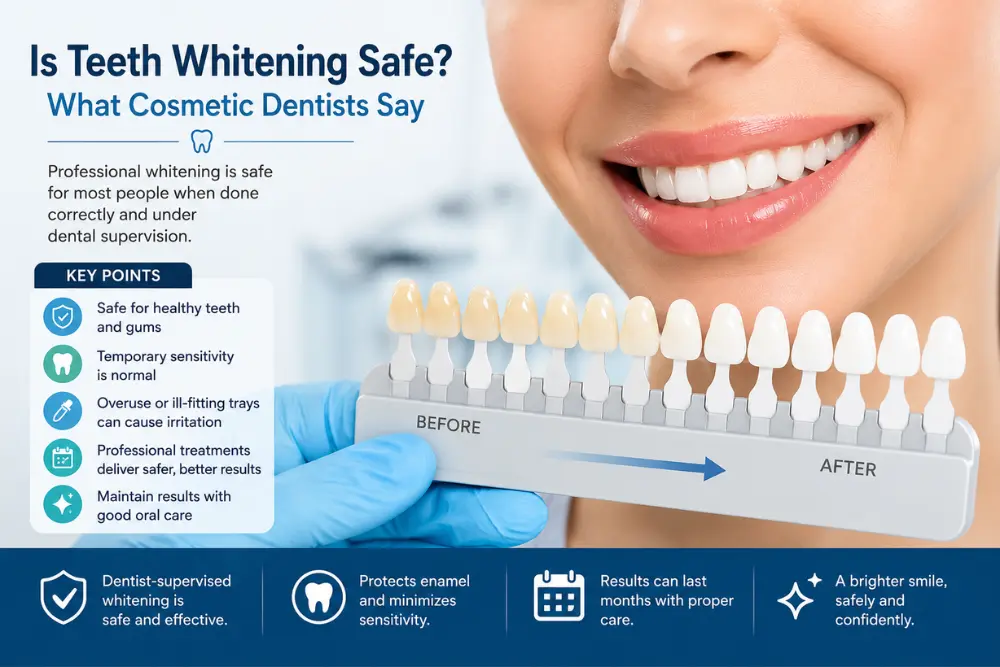
For most people with healthy teeth and gums, yes, professional teeth whitening is considered safe. It’s one of the most researched cosmetic dental procedures out there, and dentist-supervised whitening carries minimal risk when it’s done correctly. The nuance is in that last phrase: done correctly.
Professional, in-office whitening typically uses higher-concentration bleaching agents than anything sold over the counter, which is exactly why it works faster, sometimes lightening teeth by several shades in a single visit. But that strength is also why it’s applied under supervision. Dentists use protective buffer gels and precise application techniques to keep the bleaching agent on the enamel and off the gums, which is the step most at-home kits and one-size-fits-all trays simply can’t replicate.
Can Teeth Whitening Damage Teeth? Where the Real Risks Come From
This is where most of the real concern comes from, and it’s worth separating fact from worry. The short answer to “Can teeth whitening damage teeth?” is rarely, and almost always because of avoidable factors, not the bleaching process itself.
Temporary sensitivity is common, and it’s not damage. The most frequent side effect of whitening is short-term tooth sensitivity to hot or cold, along with occasional gum irritation. This typically fades within a day or two and isn’t a sign that your enamel has been harmed.
Overuse is where actual problems start. Bleaching agents are designed for measured, dentist-guided use. Whitening too frequently, leaving gel on too long, or using high-strength products without supervision can wear down enamel over time and increase sensitivity that doesn’t bounce back as quickly.
Ill-fitting trays are a bigger risk than the gel itself. Generic, one-size-fits-all trays from drugstore kits often don’t seal properly, which lets bleaching gel leak onto the gums and cause irritation or chemical burns in more serious cases. Custom-fitted trays, made from an actual impression of your teeth, solve this by keeping the gel exactly where it belongs.
Existing dental work won’t whiten. Crowns, veneers, and fillings don’t respond to bleaching agents the way natural enamel does, which can lead to uneven color if whitening isn’t planned around existing restorations- something a dentist will factor into your treatment plan.
Not everyone is a good candidate. Whitening isn’t recommended for people with untreated cavities, significant gum disease, or certain types of internal tooth staining, since bleaching in those cases can mask a problem rather than fix it or cause unnecessary irritation.
Is Teeth Whitening Bad for Your Teeth Long-Term?
Used as intended, no. Whitening doesn’t permanently weaken enamel or make teeth more prone to decay. The long-term concern isn’t the treatment itself; it’s unsupervised overuse: repeatedly bleaching beyond what your teeth need, stacking multiple whitening products at once, or skipping the guidance a dentist would normally provide on how often to touch up your results. That’s the pattern that leads to lasting sensitivity, not an occasional, properly done whitening session.
How to Get White Teeth Safely (and Make the Teeth White for Longer)
If brighter teeth are the goal, here’s the order that actually protects your enamel while getting you real results:
- Start with a dental exam. Before whitening anything, your dentist should confirm there are no cavities, cracks, or gum issues that whitening could aggravate.
- Choose professional, in-office whitening for the fastest results. In-office treatments use stronger, properly buffered bleaching agents that can lighten teeth several shades in about an hour, with protective measures built into the process.
- Ask about dentist-prescribed take-home trays for gradual whitening. Custom trays molded to your teeth deliver a controlled, even dose of bleaching gel without the leakage risk of generic kits.
- Treat over-the-counter strips and kits as a lower-tier option. They’re inexpensive and easy to use, but they’re generally less effective and don’t include the same protection for your gums and surrounding tissue.
- Ask about veneers if whitening alone won’t get you there. Some discoloration, particularly from certain medications or internal trauma, doesn’t respond well to bleaching. Porcelain veneers can be a better route for those cases.
- Maintain your results. Whitening isn’t permanent. Cutting back on the foods and drinks that stain teeth, and scheduling occasional touch-ups as your dentist recommends, keeps your smile bright without needing repeated high-strength treatments.
How to Make Teeth White Between Whitening Sessions
A few daily habits go a long way toward preserving your results and slowing new staining:
- Rinse with water after coffee, tea, or red wine rather than letting them sit on your teeth.
- Keep up with regular brushing and flossing, since surface plaque buildup dulls the appearance of even white teeth.
- Stick to your regular dental cleanings, which remove the tartar and stain buildup that daily brushing can’t fully reach.
- Avoid combining multiple whitening products at once, which increases sensitivity without meaningfully improving results.
The Bottom Line
Teeth whitening, done properly, is a safe and well-established cosmetic procedure. The risk isn’t in the concept of bleaching your teeth. It’s in unsupervised, high-frequency use or products that weren’t designed to protect your gums. A dentist-guided approach, whether that’s an in-office treatment or custom take-home trays, gives you the brightening results people actually want without the guesswork of a drugstore kit.
Talk to a Cosmetic Dentist Before You Start
If you’re still asking “is teeth whitening safe for me specifically,” that’s exactly the kind of question a quick consultation answers better than any article can. At Eagle Falls Dentistry, our cosmetic dentistry team can check for any underlying issues first, then walk you through teeth whitening options suited to your teeth, whether that’s an in-office treatment or custom take-home trays.
Schedule an appointment to get started, or contact us if you have questions first. You can also learn more about our team on the About Us page.
Frequently Asked Questions
Is it safe to bleach your teeth?
For most people with healthy teeth and gums, yes. Professional teeth whitening, done under a dentist’s guidance, is considered a safe and well-studied cosmetic procedure with minimal risk.
Is teeth whitening bad for your teeth?
No, not when it’s done as intended. Whitening doesn’t permanently weaken enamel. Problems tend to come from overuse, ill-fitting trays, or unsupervised high-strength products rather than from whitening itself.
Can teeth whitening damage your teeth?
It can cause temporary sensitivity or gum irritation, which usually resolves within a day or two. Real damage is uncommon and is typically linked to overuse or generic trays that let bleaching gel leak onto the gums.
How can I get white teeth without damaging my enamel?
Start with a dental exam to rule out cavities or gum issues, then choose a dentist-supervised option, either in-office whitening or custom take-home trays, rather than unsupervised over-the-counter kits.
How long does teeth whitening last?
Results vary by person and habits, but many patients see their whitening hold for several months to a year or more before a touch-up is needed. Avoiding staining foods and drinks and keeping up with regular cleanings help results last longer.