

Losing a tooth changes more than how your smile looks. It affects how you chew, how your jaw functions, and, over time, the structure of your jawbone itself. Dental implants are one of the few tooth replacement options that address all of these issues at once, not just the visible gap, but the underlying health of your mouth.
What Makes Dental Implants Different
A dental implant is a small titanium post placed into the jawbone, acting as an artificial tooth root. Once it fuses with the bone through a process called osseointegration, a custom crown is attached on top, restoring the tooth’s appearance and function. Unlike dentures or bridges, which sit on top of the gum or rely on neighboring teeth for support, implants are anchored directly into the bone, which is what makes them behave and feel closest to a natural tooth.
How Dental Implants Improve Oral Health
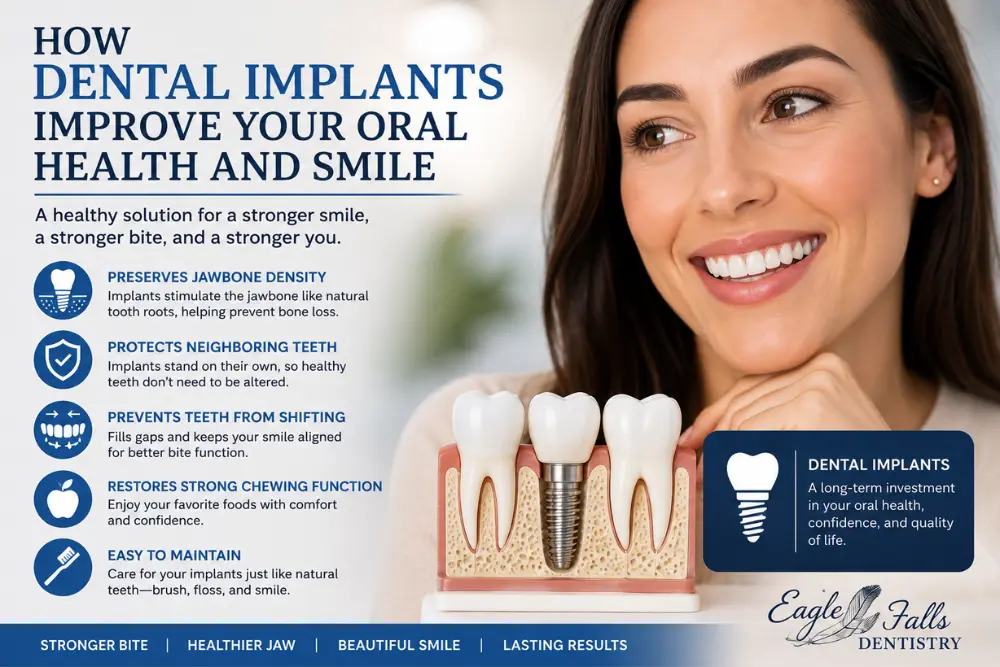
They preserve jawbone density. When a tooth is lost, the jawbone beneath it begins to lose density over time, since it no longer receives the stimulation that comes from chewing and biting pressure. This is one of the most overlooked consequences of missing teeth. A dental implant replaces that stimulation directly through the bone, helping maintain jaw density and preventing the sunken facial appearance that often develops years after tooth loss.
They protect the health of neighboring teeth. Bridges typically require grinding down healthy adjacent teeth to support the replacement. Implants stand on their own, so surrounding teeth stay untouched and structurally intact.
They reduce the risk of shifting teeth. A gap left by a missing tooth creates space for neighboring teeth to gradually shift out of alignment, which can affect bite function and lead to further dental issues. Filling that gap with an implant keeps the rest of your smile stable.
They support better chewing function. Because implants are firmly anchored in the jawbone, they restore near-normal biting force, which dentures often can’t match. This makes a real difference in day-to-day eating comfort and nutrition.
They’re easier to maintain than removable options. Implants are cared for like natural teeth, brushing and flossing normally, without the extra cleaning routines and adhesives that come with dentures.
Benefits of Dental Implants for Jawbone Density
This deserves its own focus, since it’s one of the most significant long-term benefits implants offer that other tooth replacement options simply don’t. Jawbone tissue relies on regular pressure and stimulation to maintain its density, the same way other bones in the body respond to use. Without a tooth root in place, that stimulation stops, and the bone gradually resorbs, becoming thinner and weaker over months and years.
This bone loss isn’t just a dental concern. It can alter facial structure, cause the jaw to feel or look different over time, and complicate future dental work if left unaddressed. A dental implant is currently the only tooth replacement option that directly recreates the stimulation a natural tooth root once provided, actively helping preserve jawbone density rather than simply sitting on top of it.
How Dental Implants Improve Quality of Life
Beyond the clinical benefits, patients consistently report changes that go well beyond dental health. Eating becomes easier and less restricted, since implants restore chewing strength closer to natural teeth. Speech often improves for patients who previously dealt with shifting dentures affecting pronunciation. Confidence tends to increase simply because the smile looks and functions like it did before tooth loss, without the visible gaps or the self-consciousness that often comes with them.
For many patients, this is the difference between avoiding certain foods or social situations and returning to normal life without giving it much thought. That shift, from managing a dental problem daily to simply living without thinking about it, is often the most meaningful benefit implants provide.
Aesthetic Dental and Implant Surgery: Getting to Your Dream Smile
Modern implant dentistry isn’t just functional. It’s built around aesthetic outcomes as much as structural ones. Aesthetic dental and implant surgery focuses on matching the implant crown’s color, shape, and positioning to the rest of your smile, so the result looks like it belongs there rather than standing out as a repair.
For patients working toward a dream smile, whether that means replacing a single missing tooth or restoring several, implants offer a level of realism and permanence that other options can’t match. The crown is custom-made to fit seamlessly among natural teeth, and because the implant itself is fixed in the bone, there’s no risk of visible movement or slipping that can occur with removable devices.
Who Is a Good Candidate for Dental Implants
Most healthy adults with sufficient jawbone density are good candidates for implants. Patients who have experienced significant bone loss may still qualify with a bone graft procedure beforehand, which rebuilds the area enough to support an implant. Gum health also matters, since active gum disease needs to be treated before implant placement can move forward safely. A consultation is the clearest way to determine whether implants are the right option for your specific situation or whether a different restoration would serve you better.
Implants are the right fit specifically for teeth that are missing or beyond saving. If your concern is cosmetic rather than structural, such as a chipped tooth, discoloration, or a small gap, veneers may be a simpler solution worth discussing first.
What to Expect From the Implant Process
Getting a dental implant typically happens in stages. First, the implant post is placed into the jawbone, followed by a healing period, often several months, that allows the bone to fuse securely around it. Once healing is complete, an abutment and custom crown are attached, completing the restoration. The timeline varies by patient and whether additional procedures like bone grafting are needed, but the investment in time reflects the implant’s long-term durability. With proper care, implants are designed to last for decades.
Frequently Asked Questions
How do dental implants improve oral health compared to other options?
Implants preserve jawbone density, protect neighboring teeth from unnecessary alteration, prevent shifting, and restore chewing function closer to natural teeth than dentures or bridges typically allow.
Do dental implants really help prevent bone loss?
Yes. Implants recreate the stimulation a natural tooth root provides, which helps maintain jawbone density in a way that bridges and dentures don’t.
How long do dental implants last?
With proper care, including regular brushing, flossing, and dental checkups, implants are built to last for decades and, in many cases, a lifetime.
Are dental implants painful?
Most patients report the procedure is more comfortable than expected, with local anesthesia used during placement and manageable, short-term discomfort during healing.
How long does the full dental implant process take?
The full process, from placement to final crown, often takes several months, largely due to the healing time needed for the implant to fuse with the jawbone.
Final Thoughts
Dental implants do more than fill a gap in your smile. They protect the long-term health of your jawbone, keep the rest of your teeth stable, and restore function and confidence that missing teeth can quietly take away over time. If you’re considering implants and want to know whether they’re the right option for your smile, our team can walk you through the process from consultation to completion.
To learn more about our approach, visit our Dental Implants page, or schedule an appointment to discuss your options with our team.